
Reliable video converter, editor, and compressor for daily tasks.

How to Convert Portrait Video to Landscape and Keep Quality

Posted by Aira Lesly Escoto to Edit Video/Audio Nov 02, 2026
Want to show a vertical video on a widescreen screen? Simply stretching it can make everything look distorted, while zooming in may hide important details. A better way to convert portrait video to landscape is to choose a suitable layout. Crop the footage to 16:9, use a blurred or plain background to fill the sides, or let an AI tool extend the background.
Guide List
Portrait vs. Landscape Video: What's the Difference 3 Ways to Convert Portrait Video to Landscape Tips to Keep Video Quality When Converting Portrait to LandscapePortrait vs. Landscape Video: What's the Difference
The difference is the shape of the frame. Portrait video is tall and narrow. Landscape video is wide and short.
Portrait video is usually 9:16. That's 1080 x 1920 pixels. You hold your phone upright, and it fits the screen. TikTok, Instagram Reels, and YouTube Shorts all use this shape.
Landscape video use a 16:9 aspect ratio. A common size is 1920 × 1080 pixels, which works well on TVs, computers, and monitors. It's also widely used for YouTube videos and online presentations.
Here's the part people miss. Changing the canvas to 16:9 doesn't change your footage. The clip is still tall and narrow. It just sits inside a wider box now. That's why you see space or black bars on the sides.
3 Ways to Convert Portrait Video to Landscape
There's no single best method for converting a vertical video to a horizontal one, or vice versa. Each one trades something away. Just read and pick the one that fits your clip.
1. Crop the Video to 16:9
Cropping works best when your subject is near the center, and the edges of the video are not important. 4Easysoft Total Video Converter lets you rotate and crop footage, choose aspect ratios such as 16:9 and 9:16, and adjust the zoom mode. It also lets you set the output format in the same place. That's handy if you want to fix the framing and convert the file in one go.
Switch between 16:9, 9:16, and other aspect ratios.
Handle cropping, rotating, converting, and editing in one program.
Adjust video framing and zoom settings.
Export portrait or landscape orientation videos to 1000+ formats.
100% Secure
100% Secure
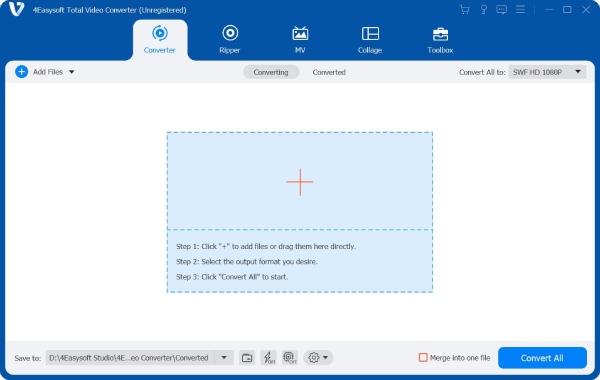
Step 1Import your portrait video into 4Easysoft Total Video Converter.
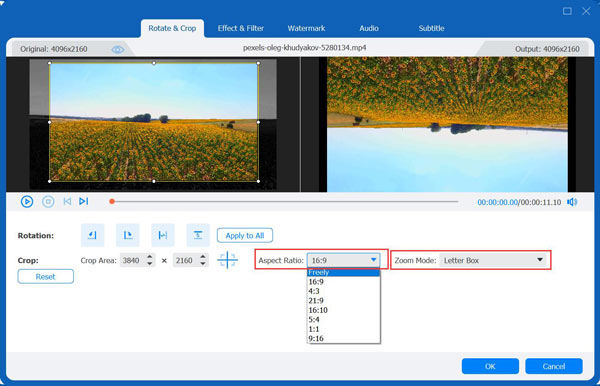
Step 2Click the "Edit" button to access video editing tools. In the default "Rotate & Crop" section, set "Aspect Ratio" to "16:9". This sets the crop frame to a widescreen shape.
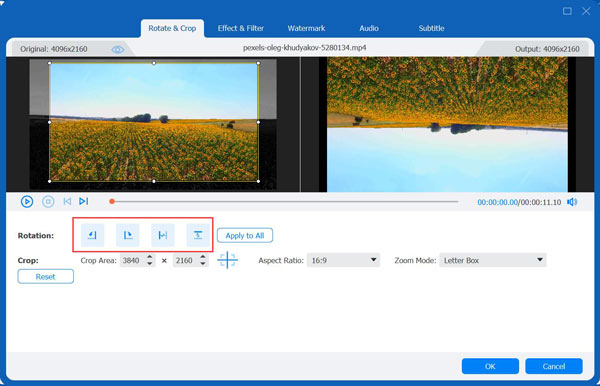
Step 3Move the frame to keep the main subject in view. Check the top and bottom edges. So, you don't cut off faces, hands, or subtitles.
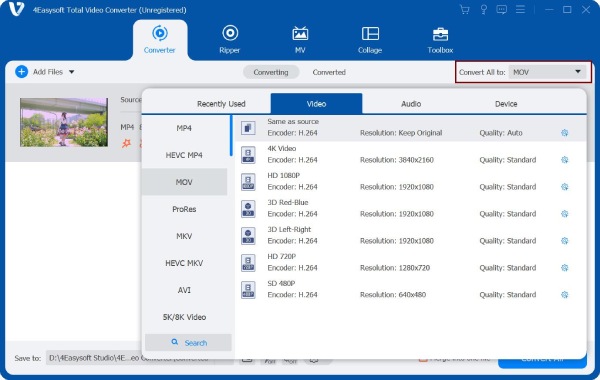
Step 4Preview the entire video clip. Later, choose the preferred output format and resolution from the "Convert All to" drop-down list. Finally, click the "Convert All" button to convert portrait videos to widescreen.
Downside: A vertical video contains much more height than a landscape frame. Video cropping can cut off heads, hands, text, or other important details.
2. Add a Blurred Background
A blurred video background is a good choice when you want to adjust the video's orientation and keep the entire portrait video visible.
- 1.Open your video editor and import the portrait clip.
- 2.Set the project canvas to 16:9.
- 3.Place the original video in the center of the frame.
- 4.Duplicate the clip and place the copy on a background layer.
- 5.Enlarge the background copy until it fills the entire landscape canvas.
- 6.Apply a blur effect and adjust the brightness.So, the background does not distract from the main video.
- 7.Preview the result and export this landscape video.
Downside: The side areas aren't new content. They're just a blurry copy of the same frame. The video also still looks vertical, just with nicer bars.
3. Expand the Background with AI
AI background expansion is worth trying when you want a portrait video to look more naturally horizontal.
- 1.Upload your portrait video to an AI video editor that supports video outpainting or background expansion, such as Opus Clip landscape video maker.
- 2.Choose a 16:9 output ratio or a landscape expansion option.
- 3.Let the AI generate content beyond the original frame.
- 4.Preview the generated areas throughout the clip. Pay attention to moving subjects, hands, faces, and background details.
- 5.Adjust the result, then export the video.
Downside: The vertical to horizontal video rotation can be inconsistent. Moving people, hands, text, and busy backgrounds often come out warped or flickery. Test first.
Tips to Keep Video Quality When Converting Portrait to Landscape
Turning a vertical video into a horizontal one can make it look blurry or cut off important details. These tips can help you get a better result.
- Start with the original video. Don't use a copy that was already compressed. Files saved from social apps or messaging apps have already lost detail.
- Export at a suitable resolution. For a 1080p landscape frame, use 1920 × 1080.
- Avoid exporting the same clip repeatedly. Each export compresses the video a little more. Make all your edits first, then export once.
- Keep the frame rate close to the source. If you shot at 30 fps, export at 30 fps. Only change it if you have a clear reason.
- Preview before you export. Look for blurry edges, awkward cropping, and stretched or squashed people.
Conclusion
Whether you're making a YouTube video, preparing a presentation, or watching on a bigger screen, there are several ways to turn portrait footage into landscape. You can crop the video if the subject is in the center, or add a blurred background to keep the full image. AI tools can also expand the frame if your editor supports them. For desktop editing, 4Easysoft Total Video Converter can help you crop or rotate your video and then save it in a format that suits your needs.
100% Secure
100% Secure
