

Reliable video converter, editor, and compressor for daily tasks.

How to Export iMovie to MP4? 3 Easy Ways Plus Useful Tips

Posted by Aira Lesly Escoto to Convert Video Nov 02, 2026
Finished editing your iMovie project, but cannot find the MP4 export button? While it makes editing feel so easy for Mac users like you, how do you save iMovie as MP4? This can be a little confusing, especially when you're constantly switching between your Apple devices. To make things easier for you, the following sections show you easy ways to export iMovie to MP4 on Mac, iPhone, and iPad, plus an alternative for more flexible exporting.
Guide List
How to Export iMovie to MP4 on Mac How to Export an iMovie Project from iPhone or iPad iMovie Export Not Working? Use This Alternative Tips for Exporting iMovie Videos to MP4How to Export iMovie to MP4 on Mac
When your iMovie project is ready, you can export the video to your Mac. Choose the resolution and quality you need, then check the exported file before uploading it or sharing it elsewhere. iMovie exports video in a format that is generally compatible with MP4 playback.
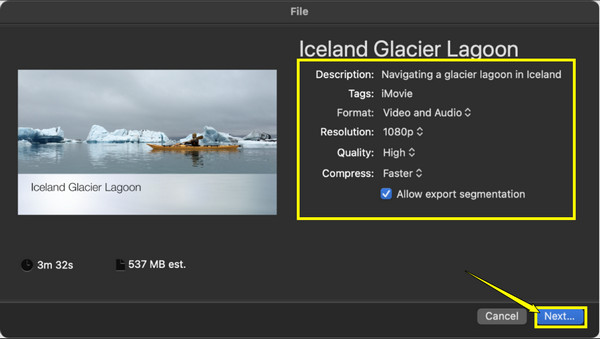
Step 1Launch iMovie on your Mac and open your project. Click the "Share" button in the corner, and select "Export File".
Step 2Enter a file name and description if you want. Then, choose your resolution, quality, and compression settings. Confirm if the format is MP4-compatible.
Step 3Click "Next", select your file location, and click the "Save" button.
How to Export an iMovie Project from iPhone or iPad
On your iPhone and iPad, iMovie keeps the export steps very simple. Instead of a dedicated Export to MP4 button, you will use the Share Video option to save your project. From there, you can customize the video resolution and save your video directly to your iPhone/iPad or share it elsewhere. One more thing for the smoothest result to export MP4 from iMovie, make sure your device has enough space before exporting.
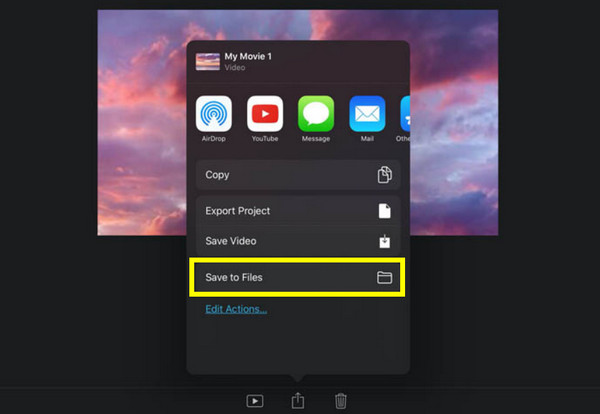
Step 1Open the iMovie app on your iPhone/iPad. Choose the movie project you wish to export. Tap the "Share" button on your project, and choose "Share Video".
Step 2Next, select your desired resolution. Then tap "Save to Files" to store the exported video on your iPhone/iPad, or choose another sharing option.
Step 3Locate your video in the Files app, where you can now move, upload, or share as needed.
iMovie Export Not Working? Use This Alternative
What if iMovie export to MP4 keeps on failing? Perhaps you need more control over your final file. Then, 4Easysoft Total Video Converter is a handy alternative that makes the process smoother. Aside from MP4, it supports a wide range of formats, including MOV, AVI, and MKV, and lets you adjust key output settings before anything else. You can edit, enhance, and customize your video as well, which is a very great addition when a basic export is not enough. With all these things mentioned, this iMovie alternative is a simple yet effective way to get your MP4 file that works smoothly across your different devices and platforms.

Export your videos to MP4 and many other popular formats.
Custom output settings like resolution, encoder, frame rate, and more.
Batch conversion for converting multiple videos at once, saving time.
Fast processing to speed up video conversion when supported.
100% Secure
100% Secure
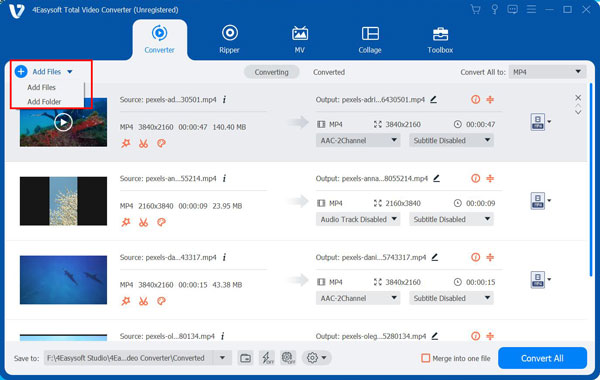
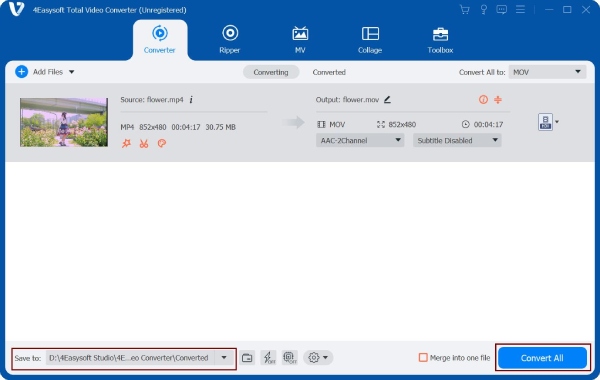
Step 1Start 4Easysoft Total Video Converter on your computer, and click the "Add Files" button to import your exported iMovie video project.
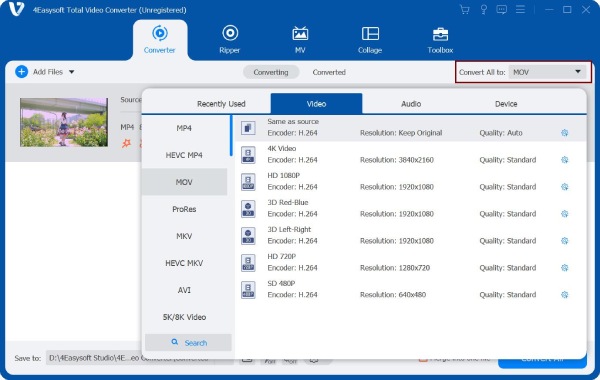
Step 2Next, click the "Format" menu next to your video and choose "MP4" from the available formats under the "Video" section.
Step 3If necessary, click the "Custom Profile" button to adjust the resolution, frame rate, bitrate, encoder, and other video parameters.
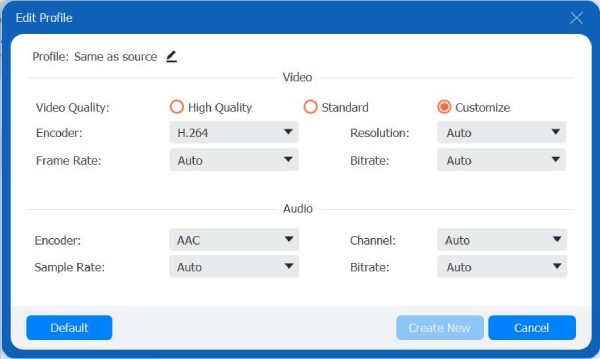
Step 4You can use the built-in editing tools as well if you wish to trim unwanted sections, rotate your video, crop the frame, or apply other effects.
Step 5Now choose where you want your converted MP4 file saved. Click the "Convert All" and wait for the software to finish processing your video.
Tips for Exporting iMovie Videos to MP4
Saving iMovie projects as MP4 is only part of the process. The export settings can also affect its quality, file size, and compatibility. And a few small choices can make a difference to avoid unnecessarily large files or videos.
- Use the resolution your video was recorded in. This helps retain the original level of detail and avoids an unnecessarily large export.
- Stick with H.264 for everyday use. It's a common video codec that works well for sharing MP4 files across different devices and apps.
- Don't automatically choose the highest quality. Higher quality is also equal to a larger file size. Choose a setting that will give you a good balance between the quality and storage space.
- Keep the original export. Save a copy of the original exported video before making any edits, so you have a backup if you need to create another version later.
- Use batch conversion for multiple videos. For your several iMovie videos, batch conversion can help you process them all and save you time for handling each file.
Conclusion
Whether you're working on your Mac, iPhone, or iPad, there's got to be a way to convert iMovie videos to MP4. And if iMovie's export options are not quite enough, a dedicated video converter can give you more flexibility over your chosen format, quality, and file size. This is where you need a 4Easysoft Total Video Converter. Not only does it support MP4 conversion, but it also has various editing and output customization features, making it much easier and enjoyable for you to convert and manage your iMovie videos.
100% Secure
100% Secure
